
How to Apply Makeup to Look Younger: 7 Techniques That Actually Work
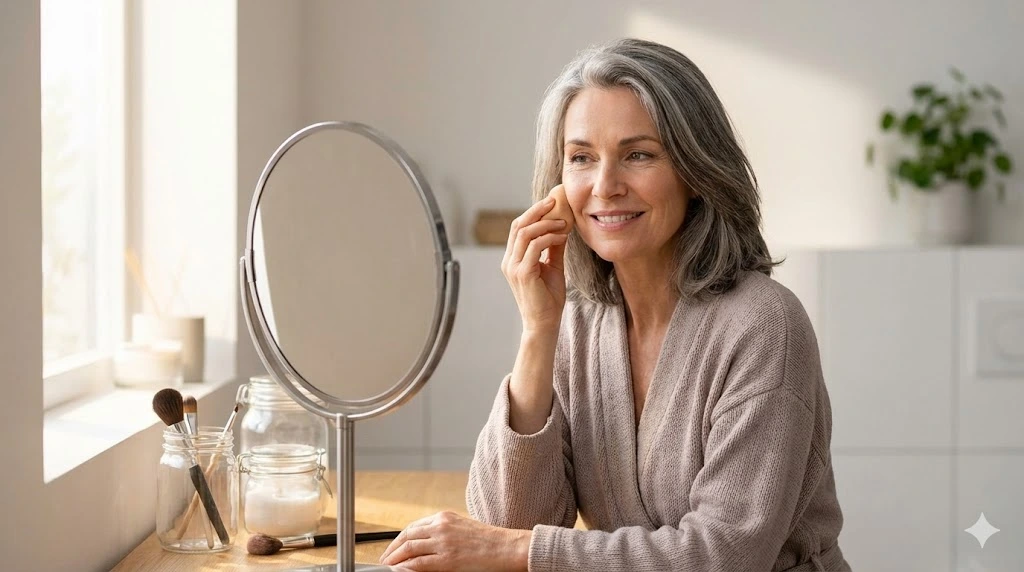
You've watched the tutorials. You've bought the products everyone recommends. But when you look in the mirror, your makeup somehow makes you look older instead of younger. The foundation settles into every line. The powder emphasizes texture you didn't even know you had.
You're not imagining it—and you're definitely not alone.
The problem isn't your face. It's that most makeup advice is designed for younger skin. What works at 25 can backfire dramatically at 45, 55, or 65. The good news? A few simple technique changes can transform your entire look.
This guide covers 7 application methods that work with mature skin, not against it. You'll learn why certain approaches age you, which swaps make the biggest difference, and how to build a routine that takes minutes—not hours.
While this guide shares general beauty techniques, everyone's skin is unique. Consider consulting with a makeup professional for personalized recommendations.
The Short Answer
Yes, the right makeup application can help you appear more refreshed and youthful—but technique matters more than products. The key principles are: less coverage is often better, cream formulas typically work better than powders on mature skin, and where you place products matters as much as what you use. Done incorrectly, makeup can actually emphasize the features you're trying to minimize. Here's what beauty professionals recommend.
---Why Makeup Can Sometimes Add Years
Before diving into solutions, it helps to understand why your current routine might not be working.
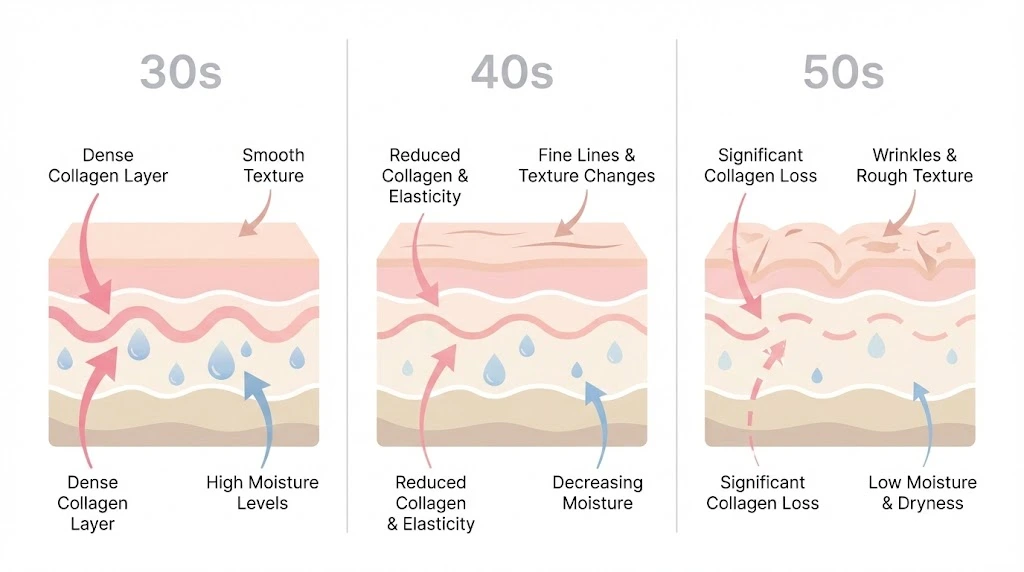
After 40, skin undergoes gradual changes. According to dermatological research, the dermis (the skin's middle layer) becomes thinner over time. The body's natural production of hyaluronic acid—the molecule that helps skin retain moisture—gradually decreases. Some studies suggest collagen production may decline by approximately 1% per year starting in the early 30s.
What does this mean for makeup? Skin tends to become drier and may show more texture. Heavy products that once looked flawless can now sit on top of the skin rather than blending in. Powder can cling to dry patches. Full-coverage foundation may settle into fine lines within hours.
A 2019 study in the Journal of Cosmetic Dermatology observed that participants using lighter-coverage, hydrating formulas reported better satisfaction with their appearance compared to those using traditional full-coverage products.
The solution isn't to stop wearing makeup—it's to adapt your approach.
7 Techniques That Actually Work
Technique 1: Start with Properly Hydrated Skin
The foundation of youthful-looking makeup isn't foundation—it's what goes underneath.
What to do: Apply moisturizer to slightly damp skin, wait 60 seconds, then follow with a hydrating primer. Look for primers with words like "hydrating," "smoothing," or "illuminating" rather than "mattifying" or "pore-minimizing."
Why it works: Hydrated skin creates a smooth canvas. When skin is properly moisturized, makeup glides on rather than grabbing onto dry patches. Many makeup artists note that well-prepped skin requires less product overall, which helps avoid the heavy, cakey look that can emphasize texture.
How to start: Tomorrow morning, add one extra minute between moisturizer and makeup. That simple pause allows products to absorb properly.
Technique 2: Choose Light-Coverage, Luminous Base Products
The instinct to cover everything often backfires. Heavy foundation doesn't hide lines—it highlights them.
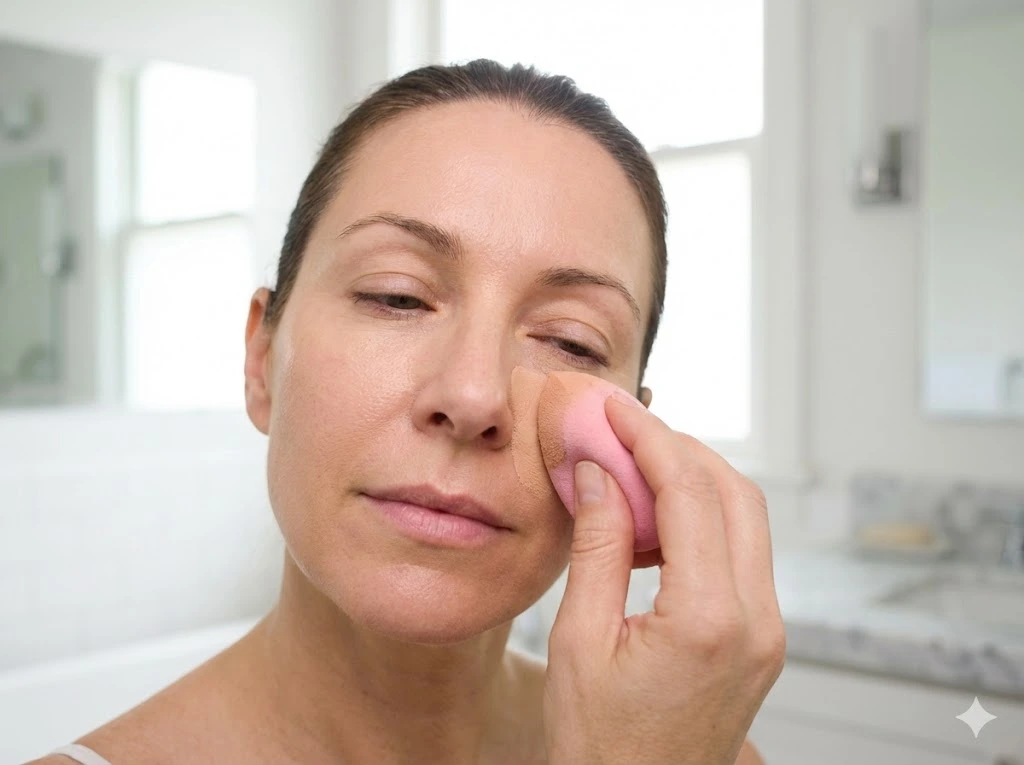
What to do: Swap full-coverage foundation for BB cream, tinted moisturizer, or a light-coverage foundation with a luminous or satin finish. Apply with a damp beauty sponge, starting at the center of your face and blending outward.
Why it works: Sheer formulas let your natural skin show through while evening out tone. The slight luminosity mimics the natural light reflection of youthful skin. Beauty experts often describe the goal as "your skin, but better"—not a mask.
| Skin Concern | Recommended Formula | What to Avoid |
|---|---|---|
| Dry skin | Hydrating, dewy finish | Matte, powder-based formulas |
| Combination | Satin finish, buildable | Heavy cream or thick liquids |
| Visible texture | Light-reflecting, sheer | Full-coverage, thick formulas |
| Uneven tone | Tinted moisturizer + spot concealing | All-over heavy coverage |
Pro tip: You likely need less product than you think. Start with a pea-sized amount and add only where needed.
Technique 3: Conceal Strategically—Not Everywhere
More concealer doesn't mean better coverage. Over-applying can create the opposite of what you want.
What to do: Use concealer only where you truly need it—typically under the eyes and on specific spots. Choose a shade just one shade lighter than your skin (not two or three shades lighter). Apply in an inverted triangle shape under the eyes, then gently tap to blend. Never rub.
Why it works: Strategic concealing brightens without creating harsh contrasts or adding bulk. The tapping motion prevents product from being pushed into fine lines. Going too light creates a reverse raccoon effect that draws attention to the area.
The key: Less product, better placement, gentle blending.
Technique 4: Choose Cream Products Over Powder
This single swap makes one of the biggest differences for mature skin.
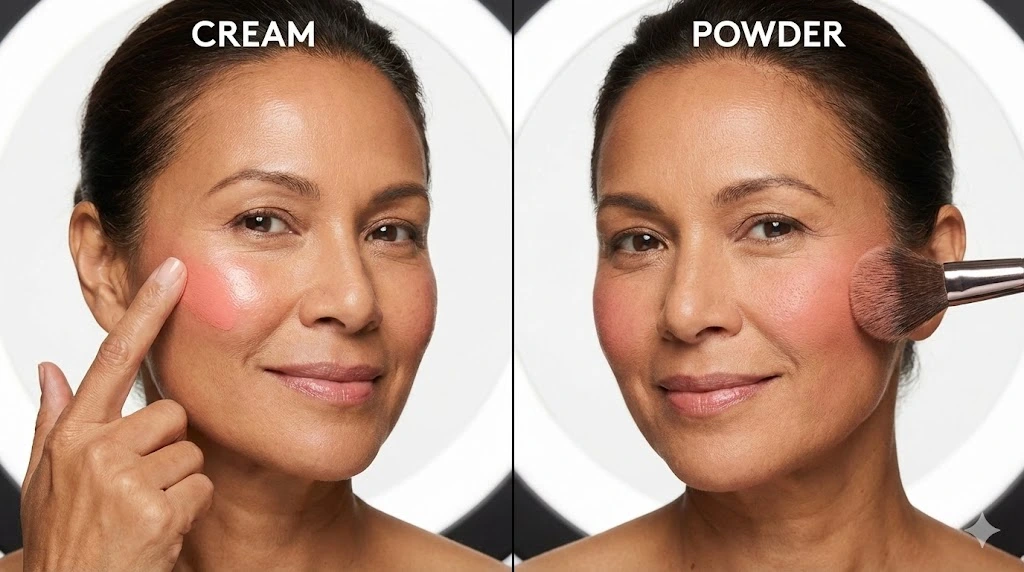
What to do: Replace powder blush with cream or liquid blush. Switch powder eyeshadow for cream shadow sticks or pots. If you must use powder products, apply them sparingly over a cream base.
Why it works: Powder formulas can settle into fine lines and cling to dry patches, creating a textured appearance. Cream products blend into skin seamlessly and often contain moisturizing ingredients. They also move with your face rather than cracking or separating.
According to makeup artists who specialize in mature skin, cream blushes in particular create a natural, dewy flush that looks like it's coming from within—rather than sitting on top.
Technique 5: Lift with Strategic Blush Placement
Where you place blush matters more than which shade you choose.
What to do: Apply blush higher than you might think—on the upper part of your cheekbones, not the apples of your cheeks. Blend in small circular motions, sweeping slightly upward toward your temples. Use warm, natural tones: soft peach, coral, or dusty rose tend to be universally flattering.
Why it works: Traditional apple-of-cheek placement can visually pull the face downward. Higher placement creates a subtle lifting effect. Think of it as following the natural structure of your cheekbones rather than fighting against gravity.
Avoid: Heavy application, dark shades, or blush placed too low on the face.
Technique 6: Open Your Eyes with Soft Definition
Eye makeup offers significant opportunity—but also significant risk of adding years if done incorrectly.
What to do:
- Curl your lashes before mascara (this alone makes a noticeable difference)
- Choose brown or soft gray eyeliner instead of harsh black
- Apply liner to the upper lash line only, keeping it thin
- Use matte or satin eyeshadows rather than heavy shimmer
- Add a touch of light shimmer only to the inner corners of eyes
Why it works: Curled lashes open up the eye area and create a lifted appearance. Softer liner colors define without harshness. Shimmer on the mobile eyelid (the part that moves) can emphasize crepey texture, but a small amount in the inner corner brightens the eyes without this issue.
| Eye Makeup Element | Youthful Approach | What Ages |
|---|---|---|
| Eyeliner color | Brown, gray, soft navy | Harsh black all around |
| Liner placement | Upper lash line only | Heavy lower lid lining |
| Eyeshadow finish | Matte or satin | Heavy shimmer/glitter on lid |
| Mascara | Curled lashes, upper focus | Clumpy, lower lash heavy |
Technique 7: Define Lips Without Harsh Lines
Lips naturally lose some volume over time, and fine vertical lines around the mouth can cause lipstick to feather. But the solution isn't to stop wearing lip color.
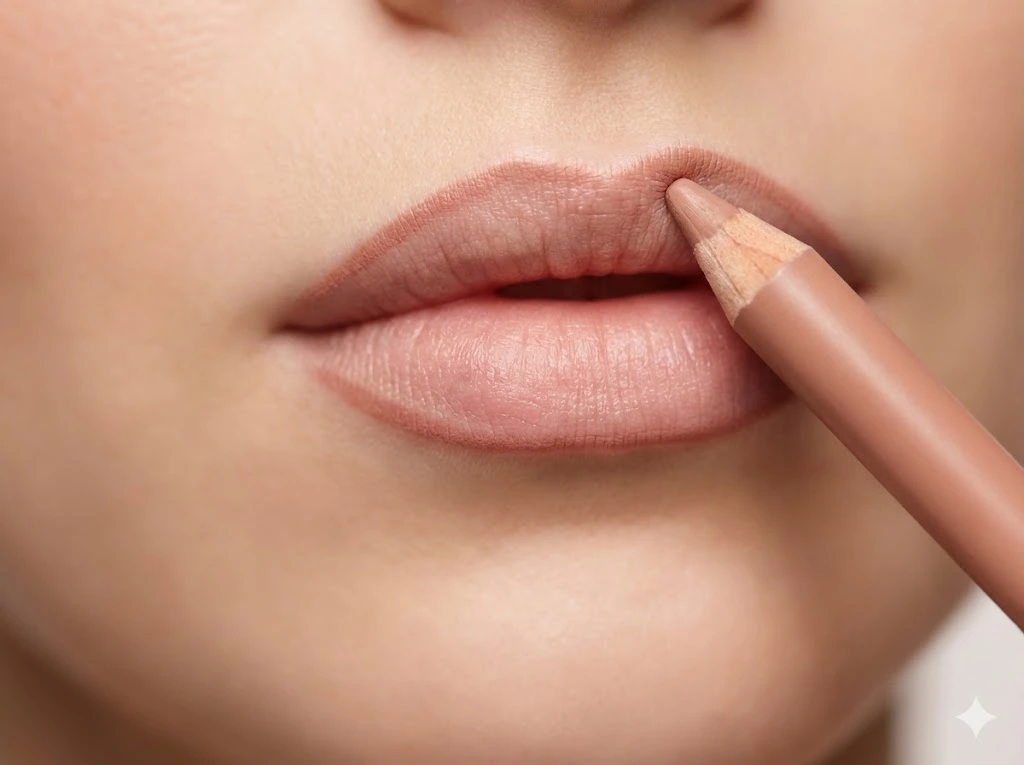
What to do: Apply a lip liner that matches your natural lip tone (not your lipstick shade) to create a subtle barrier. Use creamy, hydrating lipstick formulas rather than ultra-matte. Consider lip glosses or satin finishes for a plumping effect. Keep lips moisturized with balm before applying color.
Why it works: Lip liner prevents feathering without creating an obvious outline. Creamy formulas don't emphasize texture the way matte products can. A slight sheen on the lips reflects light and creates the appearance of fullness.
Avoid: Dark, flat matte colors that can make lips appear thinner, and obvious over-drawing that looks unnatural.
3 Mistakes That Add Years
Even with the right products, these common errors can undermine your efforts.
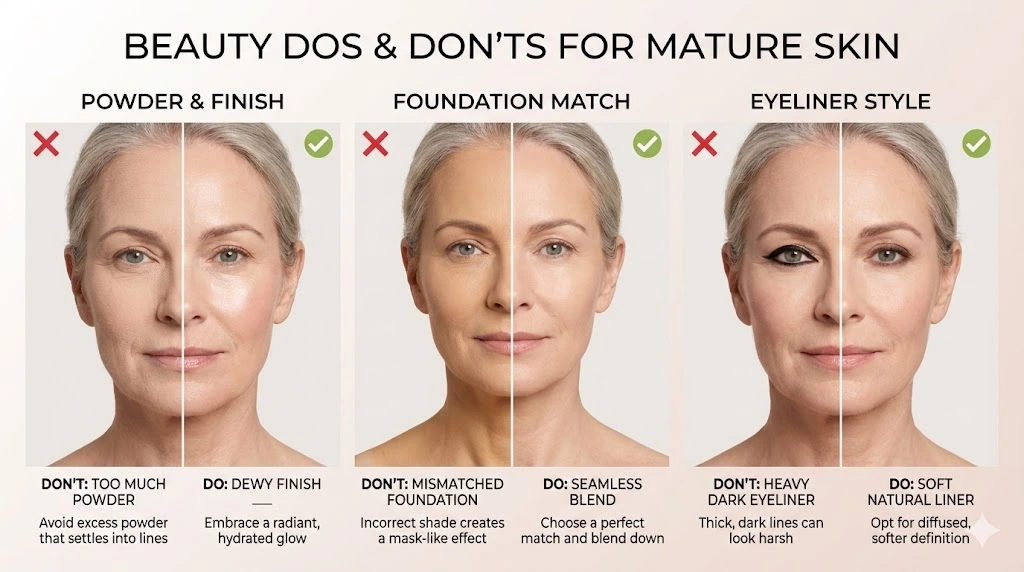
Mistake #1: Using Too Much Powder
Why people do it: To set makeup and control shine—habits from when skin was oilier.
Why it ages: Powder absorbs moisture and settles into every line and pore. On mature skin, this creates a dry, flat appearance that emphasizes texture rather than blurring it.
The fix: Use setting spray instead, or apply powder only to your T-zone where you actually need oil control. Many professionals suggest skipping face powder entirely and setting only with a light mist.
Mistake #2: Matching Foundation to Your Face
Why people do it: It seems logical—match the foundation to your face.
Why it ages: Your face may be a different shade than your neck and chest due to sun exposure. Foundation matched only to your face creates a mask effect with a visible line at the jaw.
The fix: Match foundation to your neck and chest. Blend downward past your jawline. When your face matches your body, everything looks more natural and cohesive.
Mistake #3: Heavy, Dark Eyeliner All Around
Why people do it: To define eyes and make them stand out.
Why it ages: Dark liner circling the entire eye actually makes eyes look smaller and draws attention to any drooping or puffiness. The harsh contrast can look severe.
The fix: Use a soft brown or gray on the upper lash line only. Try tightlining (applying liner between the lashes) for definition without harshness. Skip liner on the lower lid entirely, or use a soft shadow instead.
Age-Specific Adjustments
While the core techniques apply broadly, here are some refinements by decade:
| Age Range | Priority Focus | Key Adjustments |
|---|---|---|
| 40s | Glow and prevention | Can still use some shimmer strategically; focus on brow grooming and hydrating primers |
| 50s | Hydration and lifting | Cream products become essential; emphasize upward blush placement; softer brow definition |
| 60s+ | Less is more | Minimal product overall; invest extra time in skincare prep; focus on lips and lashes for definition |
Real Experiences
Understanding how others have adjusted makeup and skincare habits for a more youthful look can provide perspective — though individual results vary significantly.
As skin ages, lighter makeup paired with consistent skincare can look more youthful than full coverage
“I really think that as we age, less is more. Foundation settles into fine lines no matter what we use.
As a 40F, I do daily skincare which has allowed me to stop wearing foundation. I get told I look 10 years younger and I attribute this to the fact that I have been consistent with my skincare for over 5 years. I have dry skin so I use multiple hydrating products as well as a chemical exfoliant 1–2x/week and a retinol moisturizer 1–2x/week.
For makeup, I only do eye primer, eyeshadow, eyeliner, eyelash primer, mascara, fill brows, and a tiny dab of concealer.”
— u/Head-Drag-1440, r/makeuptips
Small makeup adjustments can subtly lift the face and create a fresher, softer appearance
“Instead of black liner or heavy mascara on your lower line, do very light mascara only, and maybe go brown mascara for the lower lashes. You can add a little white or light-colored highlighter to your inner corners.
For your lips, add a color that’s close to your natural shade but slightly pinker and makes your lips a little fuller. You can also add some blush and highlight to your cheekbone to lift your face a little.”
— u/WinnieWithTheB, r/beauty
Key takeaway: Heavy base makeup often emphasizes fine lines as skin matures, while consistent skincare and minimal, strategic makeup can create a more youthful effect. Hydration, gentle actives, and lighter eye and lip techniques tend to soften features and visually lift the face—often with less effort and fewer products.
FAQ
What makeup makes you look younger instantly?
Curled lashes and cream blush placed high on the cheekbones tend to create the most immediate refreshed appearance. Both take under a minute and don't require new products.
Should I use setting powder if I have wrinkles?
Many makeup artists suggest minimizing powder on mature skin, as it can settle into lines. Try setting spray instead, or use powder only on your T-zone where you need oil control.
What eyeshadow colors make you look younger?
Soft, warm neutrals in matte or satin finishes tend to be most flattering. Save shimmer for a small touch in the inner corners rather than all over the lid.
Does mascara make you look younger?
Curled lashes with mascara can open up the eye area significantly. Focus on the upper lashes and consider a lengthening formula rather than heavy volumizing.
How do I keep makeup from settling into fine lines?
Proper skincare prep is key—hydrate well and use a smoothing primer. Choose lighter-coverage, cream-based products that don't sit on top of skin, and set with spray rather than powder.
Your 3-Step Action Plan (Start Today)
Step 1: Switch one powder product to cream (5 minutes) If you use powder blush, try a cream version tomorrow. Notice how it blends into skin rather than sitting on top. This single swap often creates the most visible difference.
Step 2: Try lifted blush placement (2 minutes) Apply your blush higher than usual—on your cheekbones rather than the apples of your cheeks. Blend upward toward your temples. Compare in the mirror.
Step 3: Assess your current look (1 minute) Curious how your makeup routine affects your perceived age? Our AI age estimation tool can give you an objective reference point. Try it before and after implementing these techniques.
Expected results: Most people notice improvement within a few applications. The techniques become automatic within a week or two of practice.
Bottom Line
Looking more youthful with makeup isn't about covering more—it's about working smarter. Light coverage, cream formulas, strategic placement, and proper skin prep create a fresh, natural result that heavy products simply can't achieve.
The best makeup looks like you're not wearing much at all: healthy, glowing skin with subtle definition.
Ready to see where you're starting from? How Old Do I Look photo test →
Related Guides
Understanding Aging:
Lifestyle & Prevention:
- Can You Reverse Aging from Lack of Sleep? →
- 12 Foods That Make You Look Younger →
- Does Losing Weight Make You Look Younger? →
Complete Guide:
Disclaimer: This article is for informational purposes only and does not constitute medical or professional advice. The information provided is based on general beauty industry practices and should not replace consultation with skincare professionals. Individual results may vary based on skin type, products used, and application technique. The author and website are not responsible for any actions taken based on this information.
References
- Skin Aging: What Causes It and How to Fight It - American Academy of Dermatology
- How Aging Affects Your Skin - Harvard Health Publishing
- Facial Skin Aging and the Impact of Cosmetic Products - NIH PubMed Central
- Understanding the Science of Skin Aging - Mayo Clinic
- The Effect of Cosmetic Formulation on Perceived Age - Journal of Cosmetic Dermatology
Try the photo age test
How Old Do I Look?
Upload a selfie or face photo and get an instant AI estimate of how old you look. Free, no signup required, and photos are not saved by us after analysis.
Test how old you look