
What Makes You Look Older? 12 Surprising Factors (And How to Address Them)
You scroll through old photos and notice something unsettling. The face staring back at you looks... tired. Older than you remember. You're only 35, but somehow those under-eye shadows, the dullness in your skin, and those faint lines around your mouth tell a different story.
You're not imagining it. And you're definitely not alone.
Here's the reality: looking older isn't just about wrinkles. Research suggests that multiple factors—many of them within your control—contribute to how old you appear. In this guide, we'll break down the 12 most common culprits, explain why they happen, and show you what actually works to address them.
The Short Answer
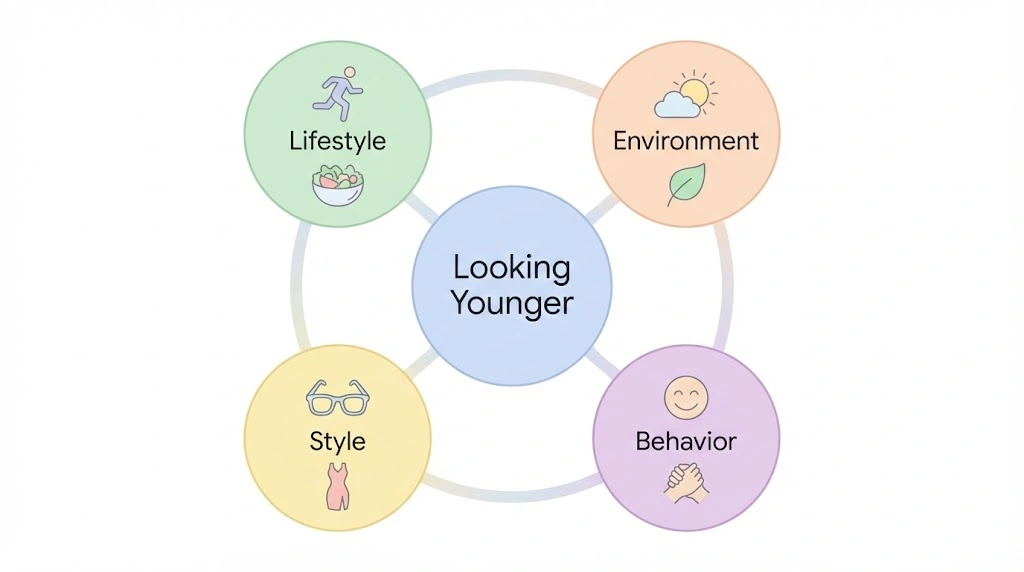
Multiple factors contribute to looking older than your actual age—and most aren't what you'd expect. Beyond wrinkles and gray hair, research points to three major categories: lifestyle habits (sleep, stress, diet), environmental exposure (sun, pollution), and presentation choices (hair, makeup, posture). The good news? Most of these are modifiable. Understanding which factors affect you most is the first step toward addressing them.
Why Do Some People Look Older Than Their Age?
Before diving into specific factors, it helps to understand what's actually happening when someone "looks older."
Our perception of age isn't based on a single feature. Instead, our brains process multiple visual cues simultaneously: skin texture, facial volume, coloring, posture, and even energy levels. Research published in Frontiers in Psychology found that facial contrast—the color and luminance difference between facial features and surrounding skin—is a cross-cultural cue for perceiving age. Skin color homogeneity also significantly influences how old someone appears.
Think of it this way: two people can have the same number of fine lines, but one appears years younger because of better skin hydration, fuller facial volume, and more vibrant coloring.
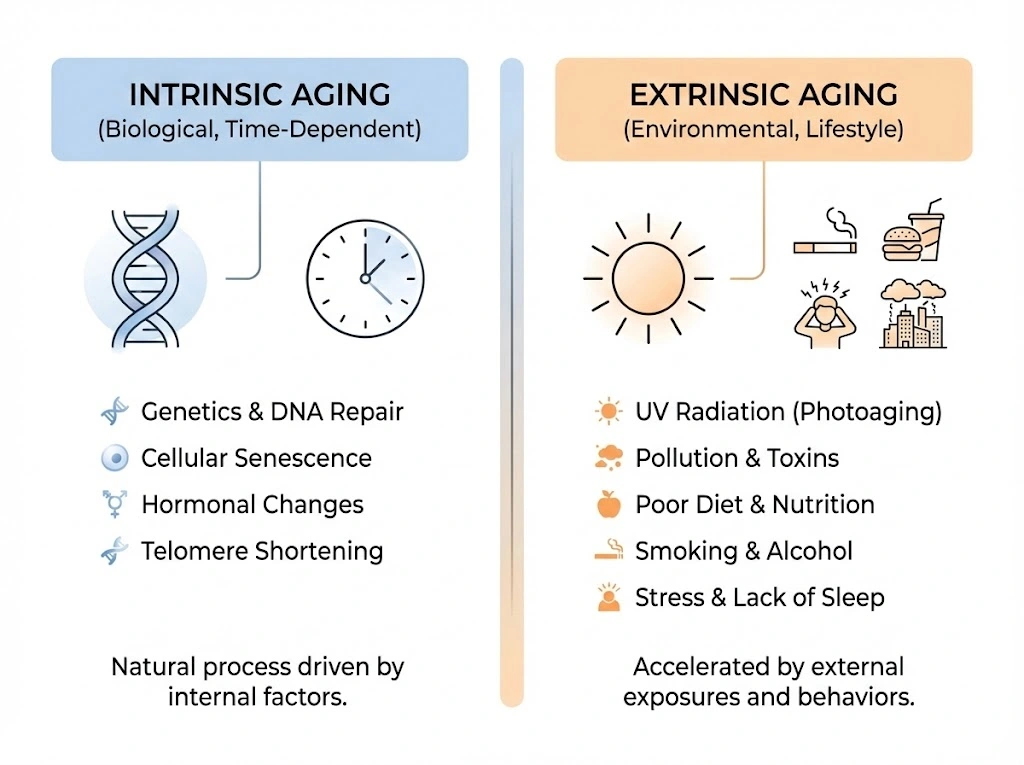
Intrinsic vs. Extrinsic Aging
Aging happens in two ways:
| Type | What It Is | Control Level |
|---|---|---|
| Intrinsic | Genetic, biological clock | Limited |
| Extrinsic | Environmental, lifestyle | High |
According to dermatology research, extrinsic factors—particularly sun exposure—account for up to 90% of visible skin aging in lighter skin types. This means the way you live has far more impact on how old you look than your genes do.
12 Factors That Make You Look Older
Based on research and expert insights, here are the most significant contributors to looking older than your age—organized into four categories.
Category 1: Lifestyle Factors
1. Poor Sleep Quality
Your skin enters repair mode while you sleep. Research from University Hospitals Case Medical Center found that chronic poor sleep quality is associated with increased signs of intrinsic aging—including fine lines, uneven pigmentation, and reduced skin elasticity—as well as diminished skin barrier function.
Beyond skin health, sleep deprivation shows up immediately: puffy eyes, dull complexion, and dark circles. The same research showed that good quality sleepers recovered more efficiently from stressors to the skin, including faster recovery from sunburn.
What helps: Aim for 7-8 hours of quality sleep. Consider your sleep position—stomach sleeping compresses facial skin and may contribute to fine lines over time.
→ Deep dive: Can You Reverse Aging from Lack of Sleep?
2. Chronic Stress
Stress triggers cortisol release, which research suggests can interfere with collagen production and skin hydration. A 2024 study published in Nature Aging found that chronic social stress triggers cellular senescence and DNA damage in the brain and other organs—hallmarks of accelerated aging.
The effects show up on your face: dullness, dryness, and tension lines around the forehead and mouth.
What helps: Regular stress management through exercise, meditation, or hobbies you enjoy. Even 10 minutes of daily relaxation can make a difference.
→ Deep dive: Does Stress Age Your Face? What Research Says
3. Sedentary Lifestyle
Movement matters more than you might think. Regular exercise boosts circulation, delivering nutrients to skin cells and promoting that "healthy glow." Research from McMaster University found that exercise may not only prevent but potentially reverse some visible signs of skin aging. In their study, sedentary volunteers over 65 who began exercising twice weekly for three months showed skin that microscopically resembled that of people 20-40 years old.
The researchers discovered elevated levels of a myokine called IL-15 in the skin of active participants, which may help regulate skin aging. A 2023 study also found that resistance training can rejuvenate aging skin by reducing circulating inflammatory factors.
What helps: Any consistent movement counts—walking, swimming, yoga, or strength training. Aim for at least 150 minutes of moderate activity per week.
4. Diet Choices
What you eat affects how you look. Research published in Clinics in Dermatology and the Skin Therapy Letter demonstrates that high sugar intake accelerates a process called glycation, where sugars bind to collagen and elastin fibers, making them stiff and prone to damage. These "advanced glycation end products" (AGEs) accumulate over time, contributing to wrinkles and loss of skin elasticity.
Conversely, diets rich in fruits, vegetables, and omega-3 fatty acids (found in salmon and walnuts) appear to support skin health.
What helps: Focus on whole foods. Antioxidant-rich fruits and vegetables, lean proteins, and healthy fats support overall appearance. Water-based cooking methods (steaming, boiling) produce fewer AGEs than grilling or frying.
→ See also: 12 Foods That Make You Look Younger
5. Dehydration
Your skin is your largest organ, and it shows dehydration quickly. Without adequate water intake, skin looks less plump, fine lines appear more pronounced, and overall complexion suffers.
What helps: Aim for adequate daily water intake. If you drink alcohol or caffeine regularly, consider increasing water consumption to compensate for their dehydrating effects.
Category 2: Environmental Factors
6. Sun Exposure
UV exposure is consistently cited as the leading environmental cause of visible skin aging. Research estimates it's responsible for up to 90% of visible skin changes people associate with getting older—particularly in lighter skin types. This includes fine lines, uneven pigmentation, and loss of elasticity.
What helps: Daily broad-spectrum SPF 30+ protection, even on cloudy days or when spending time indoors near windows. Protective clothing and seeking shade during peak sun hours (10am-4pm) also help.
7. Pollution
The SALIA study (Study on the Influence of Air Pollution on Lung Function, Inflammation and Aging) found that traffic-related air pollution exposure is significantly correlated with skin aging signs—particularly pigment spots and wrinkles. Women living in areas with higher particulate matter concentrations showed more pronounced signs of skin aging. Additional research has linked both outdoor and indoor air pollution to accelerated skin aging, including increased lentigines (age spots).
What helps: Cleanse skin daily to remove pollutants. Antioxidant-containing products may help protect against environmental damage.

Category 3: Appearance & Style Factors
8. Hair Choices
Hair color, style, and health significantly impact perceived age. Hair that's too dark or too light for your skin tone can emphasize features you'd rather minimize. Dull, damaged hair—often from heat styling or environmental factors—can add years to your appearance.
What helps: Consider colors that complement your current skin tone. Regular trims and moisture-focused hair care maintain healthy appearance.
9. Makeup Approach
The techniques that worked in your 20s may not serve you as well later. Heavy foundation can settle into fine lines, making them more visible. Matte finishes may emphasize texture rather than minimize it.
What helps: Less is often more. Light coverage, hydrating formulas, and a subtle dewiness tend to read as more youthful than heavy matte looks.
10. Clothing Fit
Ill-fitting clothes—whether too tight or too loose—can affect how old you appear. Research from style experts suggests that proper fit matters more than following trends.
What helps: Focus on clothes that fit your current body well. Proper undergarments also make a noticeable difference in overall silhouette.
Category 4: Structural & Behavioral Factors
11. Posture
Slouching and poor posture project tiredness and can make you appear older and less vibrant. Good posture signals energy and confidence.
What helps: Regular posture checks throughout the day. Core strengthening exercises support better natural alignment.
12. Facial Expression Patterns
Chronic frowning or tension in the face contributes to certain line patterns over time. Habitual expressions—like squinting at screens or furrowing your brow when concentrating—can accelerate the formation of specific wrinkles. Interestingly, research shows that while people commonly believe smiling makes you look younger, the temporary wrinkles around the eyes when smiling can actually make faces appear slightly older in direct perception.
What helps: Awareness of habitual expressions. Regular relaxation of facial muscles, especially around the forehead and jaw. Wearing sunglasses to reduce squinting.
Quick Reference: 12 Factors at a Glance
| Factor | Category | Modifiability | Primary Impact |
|---|---|---|---|
| Poor sleep | Lifestyle | High | Skin repair, dark circles |
| Chronic stress | Lifestyle | Medium | Collagen, skin hydration |
| Sedentary lifestyle | Lifestyle | High | Circulation, skin glow |
| Diet choices | Lifestyle | High | Skin health, inflammation |
| Dehydration | Lifestyle | High | Skin plumpness, fine lines |
| Sun exposure | Environmental | High | Pigmentation, wrinkles |
| Pollution | Environmental | Medium | Skin damage, dullness |
| Hair choices | Style | High | Framing, overall appearance |
| Makeup approach | Style | High | Texture emphasis |
| Clothing fit | Style | High | Overall impression |
| Posture | Behavioral | High | Energy perception |
| Expressions | Behavioral | Medium | Line formation |
3 Common Mistakes That Can Make You Look Older
Mistake #1: Focusing Only on Products, Ignoring Lifestyle
It's tempting to search for a miracle cream that solves everything. But research consistently shows that lifestyle factors—sleep, stress, diet, exercise—have more impact on appearance than any single product.
Better approach: Address fundamentals first. Products work best when supporting an already healthy lifestyle.
Mistake #2: Seeking Quick Fixes Over Sustainable Changes
Extreme diets, intense treatments, or drastic style changes can backfire. Rapid weight loss, for example, may lead to volume loss in the face that actually ages appearance.
Better approach: Gradual, sustainable changes. Small consistent improvements compound over time.
Mistake #3: Ignoring the Full Picture
Focusing exclusively on skin while neglecting hair, posture, clothing, and energy can limit results. Perceived age is holistic—your brain processes the whole package.
Better approach: Consider your overall presentation. Sometimes improving posture or updating a hairstyle makes more visible difference than expensive skincare.
Real Experiences: What People Notice
Many people who've addressed their perceived age report similar patterns. Here are some common scenarios:
Chronic stress and overwork can dramatically accelerate visible aging
"I know a guy who owns a bakery where he is also the head baker. He regularly works 10 to 16-hour shifts with almost no breaks, drinks up to 12 cups of coffee a day, and rarely takes real days off. During the summer season, he works around 90 days straight without a break. He has lived this lifestyle for about 10 years. He is 45 years old, but honestly looks closer to 75."
— u/ammenz,
r/askscience
Genetics matter, but lifestyle and stress still play a major role
"I think the biggest part is genetics :) Other than that, posture plays a big role, so exercising to maintain a straight posture and prevent muscle tightening helps. Getting enough sleep and keeping stress levels low are also important. Lastly, skincare matters — especially sunscreen and antioxidants."
— u/Ok_Ant3102,
r/AsianBeauty
Healthy habits, style, and mental health influence perceived age
"Genetics, living a healthy life by eating well and exercising at least 150 minutes per week, keeping skincare simple (plus tretinoin, though I pause it in summer), dressing how I want despite being in my mid-thirties, and going to therapy to reduce anxiety and stress. I've often been told I look like I'm still in my 20s."
— u/lurkerinthefields,
r/AsianBeauty
Key takeaway: The most impactful changes often aren't the ones you'd expect. Basics matter more than expensive interventions.
FAQ
What makes you look older besides wrinkles?
Many factors contribute beyond wrinkles: loss of facial volume, uneven skin tone, dull complexion, poor posture, tired eyes, thinning hair or eyebrows, and overall presentation including clothing and grooming choices. Research suggests skin evenness and facial contrast often matter more for perceived age than fine lines.
Can stress really make you look older?
Yes. Research indicates that chronic stress affects skin at the cellular level, potentially reducing collagen production and skin hydration. Stress also disrupts sleep and can lead to tension-related facial expressions that contribute to certain line patterns over time.
At what age do you start looking older?
There's no universal age—it varies significantly based on genetics, lifestyle, and environmental exposure. Some people notice changes in their late 20s, while others maintain a youthful appearance well into their 50s. Consistent healthy habits appear to be the most significant controllable factor.
Does losing weight make you look older or younger?
It depends. Moderate, gradual weight loss often improves overall appearance. However, rapid or extreme weight loss can reduce facial volume, potentially making someone appear older. Research suggests slow, steady approaches that preserve muscle tend to produce the best aesthetic outcomes.
How can I tell how old I actually look?
Beyond asking friends (who may not be objective), technology offers options. Age estimation tools use facial analysis to provide an external perspective on perceived age, which can be useful for tracking changes over time.
Your 3-Step Action Plan (Start Today)
Step 1: Assess Your Baseline (5 minutes)
Before making changes, know where you're starting. Take a current photo in natural lighting, or use an age estimation tool to get an objective baseline. Note what you'd like to improve.
Try it now: Visit How Old Do I Look to see how your face is currently perceived.
Step 2: Identify Your Top 2-3 Factors (10 minutes)
Review the 12 factors above. Which ones apply most to you? Be honest. Are you sleeping poorly? Skipping sunscreen? Carrying stress in your posture?
Focus tip: Don't try to fix everything at once. Pick your top 2-3 areas for improvement.
Step 3: Make One Small Change This Week (Ongoing)
Choose one actionable change from your priority areas:
- If sleep: Set a consistent bedtime this week
- If sun: Buy and use daily SPF tomorrow
- If posture: Set 3 daily phone reminders to check your posture
Expected timeline: Lifestyle changes typically show visible results within 4-8 weeks of consistent practice. Be patient and track progress with photos.

Bottom Line
Looking older than your age isn't inevitable—and it's rarely about just one thing. The 12 factors we've covered span lifestyle, environment, style, and behavior. Most are within your control.
The key insight? Small, consistent changes in the fundamentals often outperform expensive quick fixes. Sleep better, manage stress, protect from sun, stay hydrated, and pay attention to your overall presentation.
Curious how old you currently look? Get an objective assessment with our free How Old Do I Look photo test. It takes seconds and gives you a baseline to measure your progress.
Related Guides
Complete Guide:
Dive Deeper:
- Does the Sun Age Your Skin?
- Can You Reverse Aging from Lack of Sleep?
- Does Losing Weight Make You Look Younger?
- 12 Foods That Make You Look Younger
Disclaimer: This article is for informational purposes only and does not constitute medical advice. The information provided reflects general research findings and should not replace professional consultation. Individual results vary based on genetics, health conditions, and other factors. If you have specific concerns about aging or skin health, consider consulting with a qualified healthcare professional or dermatologist.
References
-
Porcheron A, Mauger E, Soppelsa F, et al. Facial Contrast Is a Cross-Cultural Cue for Perceiving Age. Frontiers in Psychology. 2017;8:1208. https://www.frontiersin.org/journals/psychology/articles/10.3389/fpsyg.2017.01208/full
-
Flament F, Bazin R, Laquieze S, Rubert V, Simonpietri E, Piot B. Effect of the sun on visible clinical signs of aging in Caucasian skin. Clinical, Cosmetic and Investigational Dermatology. 2013;6:221-232. https://pmc.ncbi.nlm.nih.gov/articles/PMC3790843/
-
Oyetakin-White P, Suggs A, Koo B, et al. Does poor sleep quality affect skin ageing? Clinical and Experimental Dermatology. 2015;40(1):17-22. https://pubmed.ncbi.nlm.nih.gov/25266053/
-
Lyons CE, Pallais JP, McGonigle S, et al. Chronic social stress induces p16-mediated senescent cell accumulation in mice. Nature Aging. 2024. https://www.nature.com/articles/s43587-024-00743-8
-
Crane JD, MacNeil LG, Lally JS, et al. Exercise-stimulated interleukin-15 is controlled by AMPK and regulates skin metabolism and aging. Aging Cell. 2015;14(4):625-634. https://pubmed.ncbi.nlm.nih.gov/25902870/
-
Danby FW. Nutrition and aging skin: sugar and glycation. Clinics in Dermatology. 2010;28(4):409-411. https://pubmed.ncbi.nlm.nih.gov/20620757/
-
Nguyen HP, Katta R. Sugar Sag: Glycation and the Role of Diet in Aging Skin. Skin Therapy Letter. 2015;20(6):1-5. https://pubmed.ncbi.nlm.nih.gov/27224842/
-
Vierkötter A, Schikowski T, Ranft U, et al. Airborne Particle Exposure and Extrinsic Skin Aging. Journal of Investigative Dermatology. 2010;130(12):2719-2726. https://www.sciencedirect.com/science/article/pii/S0022202X15346455
-
Hüls A, Vierkötter A, Gao W, et al. Traffic-Related Air Pollution Contributes to Development of Facial Lentigines: Further Epidemiological Evidence from Caucasians and Asians. Journal of Investigative Dermatology. 2016;136(5):1053-1056. https://pubmed.ncbi.nlm.nih.gov/26868871/
-
Nishimura EK, Granter SR, Fisher DE. Mechanisms of hair graying: incomplete melanocyte stem cell maintenance in the niche. Science. 2005;307(5710):720-724. https://pubmed.ncbi.nlm.nih.gov/15618488/
-
Ganel T, Goodale MA. The effect of smiling on the perceived age of male and female faces across the lifespan. Scientific Reports. 2021;11:23020. https://www.nature.com/articles/s41598-021-02380-2
-
Nkashama IJ, Kang MC, Mukherjee A, et al. Resistance training rejuvenates aging skin by reducing circulating inflammatory factors and enhancing dermal extracellular matrices. Scientific Reports. 2023;13:10214. https://www.nature.com/articles/s41598-023-37207-9
Try the photo age test
How Old Do I Look?
Upload a selfie or face photo and get an instant AI estimate of how old you look. Free, no signup required, and photos are not saved by us after analysis.
Test how old you look